


Is It Time to Move Injection Moulding to the UK? Reducing Risk, Cost and Lead Times
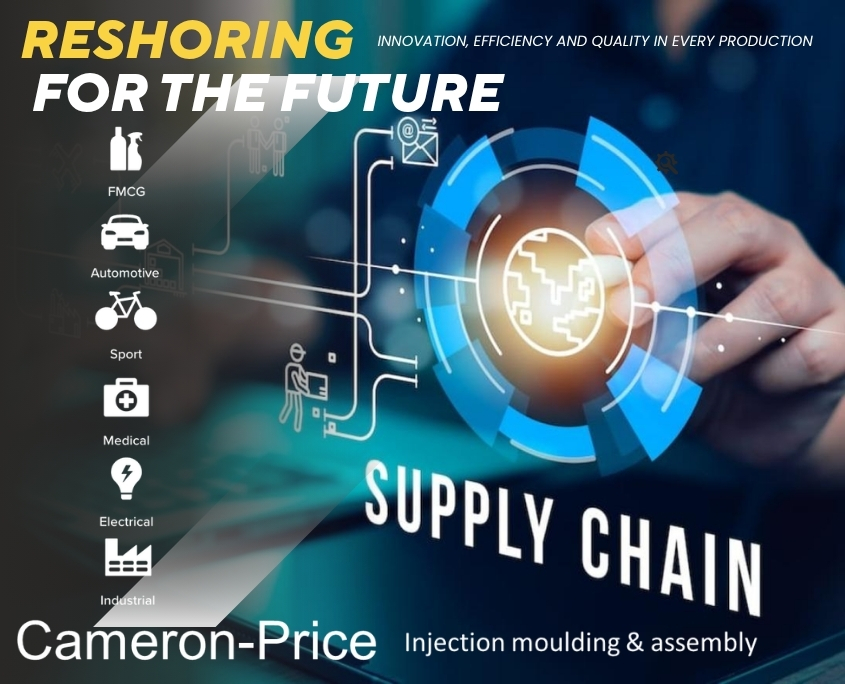
For years, offshore injection moulding looked like the obvious choice. Lower unit costs, large-scale production, established supply chains. It worked, until it didn’t.
Rising shipping costs, long lead times, political uncertainty, and quality issues have forced a rethink. What once felt efficient now carries risk, and that risk is landing squarely on manufacturers.
So the question is no longer “why would you move production to the UK?”
It’s “what’s the cost of not doing it?”
The Hidden Risk in Offshore Moulding
On paper, offshore production still looks cheaper. But that number rarely tells the full story.
Delays at ports. Minimum order quantities that tie up cash. Communication gaps that slow down changes. Quality issues that take weeks to fix, not days.
All of this builds friction into your supply chain.
When something goes wrong, you are dealing with time zones, freight schedules, and limited visibility. A simple fix can turn into a six week delay.
This is where reshoring starts to make sense. Not as a trend, but as a way to regain control.
If you want a deeper look at how this shift is already happening, this piece on reshoring your injection moulding breaks it down in more detail.
Lead Times Are No Longer Just an Inconvenience
Lead times used to be something you planned around. Now they can derail entire projects.
Waiting 8 to 12 weeks for parts might be manageable when everything is stable. It stops working when demand shifts, designs evolve, or stock runs low faster than expected.
UK-based moulding brings production closer to your business. That means:
- Faster turnaround on orders
- Quicker iteration during development
- Less need to hold excess stock
Working with a partner that offers precision injection moulding locally changes how you plan. You are no longer guessing months in advance, you are responding in real time.
Cost Is More Than Unit Price
Offshore moulding often wins on unit cost, but that ignores everything around it.
Shipping, import duties, storage, excess inventory, and waste from over-ordering all add up. Then there is the cost of errors, delays, and rework.
When you factor in the full picture, UK production can be far more competitive than expected.
There is also flexibility. Smaller batch runs, easier design changes, and reduced financial exposure if something needs to shift.
If you are breaking down the real numbers, this guide to plastic injection moulding costs gives a clearer picture of where costs really come from.
Quality Control Becomes Simpler
Quality issues offshore are harder to catch and slower to fix.
You are often relying on samples, reports, or third party inspections. If something slips through, you may not know until a full shipment arrives.
With UK manufacturing, you can be far more hands-on. Communication is direct. Site visits are possible. Adjustments can be made quickly.
Working with a team focused on quality and performance means issues are identified earlier, not after thousands of parts have already been produced.
Design and Development Moves Faster
Product development rarely follows a straight line. Designs evolve. Materials change. Requirements shift as testing progresses. Offshore production slows this down. Every change adds weeks of delay.
UK-based moulders can support the process from the start, not just production. That includes design input, prototyping, and testing.
Bringing in support from design and development early reduces costly redesigns later and speeds up time to market.
Supply Chain Resilience Matters More Than Ever
Recent years have shown how fragile global supply chains can be.
Shipping disruptions, geopolitical tension, and raw material fluctuations all create uncertainty. The longer and more complex your supply chain, the more exposed you are.
Reshoring simplifies this.
Shorter supply chains are easier to manage, easier to predict, and easier to adapt when things change.
For industries like automotive, medical and FMCG, where consistency and compliance are critical, that reliability carries real weight.
When Does It Make Sense to Reshore?
Not every project needs to move immediately. But there are clear signs it might be time:
- You are experiencing frequent delays or stock shortages
- Your order quantities feel too large or inflexible
- Design changes take too long to implement
- Quality issues are costly or difficult to resolve
- You are carrying excess inventory to compensate for long lead times
If any of these feel familiar, it is worth reviewing your current setup.
Bring Production Back Under Your Control
If your current setup is creating delays, driving up hidden costs, or limiting your ability to respond, it might be time to look at alternatives.
Explore the full range of injection moulding capabilities or speak to the team directly via the contact page to see what moving production to the UK could look like in practice.