


 https://cameron-price.co.uk/wp-content/uploads/2026/08/FROG-11.png
800
1000
cameron-price
https://cameron-price.co.uk/wp-content/uploads/2023/07/cameron-price-logo-720-200.jpg
cameron-price2026-08-17 12:22:292026-08-17 12:22:29Full-Service Injection Moulding: One Partner From Design to Despatch
https://cameron-price.co.uk/wp-content/uploads/2026/08/FROG-11.png
800
1000
cameron-price
https://cameron-price.co.uk/wp-content/uploads/2023/07/cameron-price-logo-720-200.jpg
cameron-price2026-08-17 12:22:292026-08-17 12:22:29Full-Service Injection Moulding: One Partner From Design to DespatchJust as Ford’s assembly line allowed the mass production of cars at a reasonable price, so did the advent of injection moulding enable the manufacture of a huge range of plastic products and automotive components quickly and cost-effectively. With automotive injection moulding, the two means of mass production come together. From water pump components and power steering assemblies to fuel delivery and the dash, there are many applications for injection moulding for vehicles.
Plastic use in the automotive industry
Plastics have become the premier material of choice in the automotive sector, leading to enhancements in safety, performance, and fuel efficiency. Different plastics are chosen for different functions in a car based on their strength, chemical resistance, weight, texture, aesthetic qualities and more. Fifty per cent of a car may be made up of plastics, in the interior, exterior and under the bonnet, with examples including:
- Interior:
- Dashboard.
- Door panels.
- Door and window pillars.
- Seats and associated parts.
- Exterior:
- Bumpers.
- Wheel covers.
- Head/rear light housing and lenses.
- Under the bonnet:
- Intake manifold.
- Fuel tanks.
- Steering and suspension mechanisms.
- Water and oil caps.
Automotive injection moulding
In order to keep up with the demand for cost-effective, high-volume, fast-turnaround automotive components like those mentioned above, injection moulding is often chosen over other processes like 3D printing and extrusion. Injection moulding can produce large numbers of components from one mould, which can be designed and created with high levels of detail. Other advantages of injection moulding for vehicle parts include:
- Wide choice of materials, e.g. for colour or rigidity.
- Enhanced strength.
- Reduced waste.
- Reduced labour cost and minimal human error.
- Advanced computer-aided design and operation.
So it’s no wonder that the demand for injection moulded automotive parts is only set to increase, particularly in response to the advancing electric car market, and the need for lightweight vehicles to improve fuel efficiency and meet CO2 emissions targets.
With almost 60 years’ experience and as specialists in the area of automotive injection moulding, Cameron-Price is equipped to satisfy the demand for superior, cost-effective polymer products. For advice and information, or to discover how we can help you with design, development, prototyping, low volume production and large scale manufacture, please contact us.
Other blogs
https://cameron-price.co.uk/wp-content/uploads/2026/08/FROG-11.png
800
1000
cameron-price
https://cameron-price.co.uk/wp-content/uploads/2023/07/cameron-price-logo-720-200.jpg
cameron-price2026-08-17 12:22:292026-08-17 12:22:29Full-Service Injection Moulding: One Partner From Design to Despatch https://cameron-price.co.uk/wp-content/uploads/2026/07/FROG-7-1.png
800
1000
cameron-price
https://cameron-price.co.uk/wp-content/uploads/2023/07/cameron-price-logo-720-200.jpg
cameron-price2026-07-30 11:13:182026-07-30 11:13:18Beyond the Mould: How Value-Added Operations Turn Components into Finished Products
https://cameron-price.co.uk/wp-content/uploads/2026/07/FROG-7-1.png
800
1000
cameron-price
https://cameron-price.co.uk/wp-content/uploads/2023/07/cameron-price-logo-720-200.jpg
cameron-price2026-07-30 11:13:182026-07-30 11:13:18Beyond the Mould: How Value-Added Operations Turn Components into Finished Products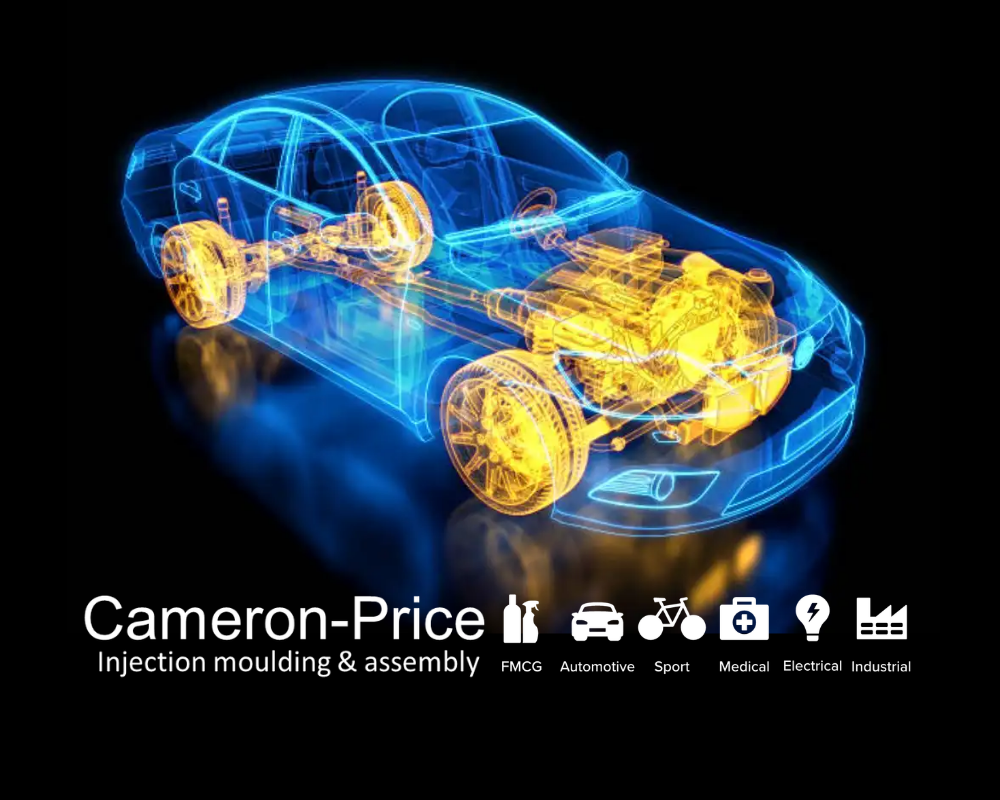 https://cameron-price.co.uk/wp-content/uploads/2026/07/FROG-7.png
800
1000
cameron-price
https://cameron-price.co.uk/wp-content/uploads/2023/07/cameron-price-logo-720-200.jpg
cameron-price2026-07-09 09:53:412026-07-09 09:53:41Injection Moulding for the Automotive Sector: What UK Manufacturers Need to Know
https://cameron-price.co.uk/wp-content/uploads/2026/07/FROG-7.png
800
1000
cameron-price
https://cameron-price.co.uk/wp-content/uploads/2023/07/cameron-price-logo-720-200.jpg
cameron-price2026-07-09 09:53:412026-07-09 09:53:41Injection Moulding for the Automotive Sector: What UK Manufacturers Need to KnowLooking to partner with a flexible, innovative, quality manufacturer? Get in touch with our friendly team today and let’s bring your product to life.